

Drunk Driver Victim
$1,500,000
Insurer offered$50,000
Traumatic brain injury caused by an impaired driver. The insurer offered $50,000.
Serving New York
Hurt in a crash? The insurance company already has a team working on your claim. You should too. A free call tells you where you stand.
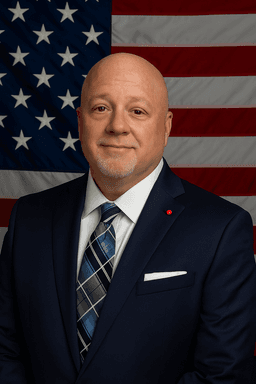 Your attorneyPaul Perkins, Esq.Of Counsel. Licensed in New York.
Attorney advertising. Services are not available in all states.
Reviewed by Paul Perkins, Attorney at Law, Of Counsel. Meet the team
In New York, a person hurt by a drunk or drug impaired driver can bring an injury claim against that driver whether or not the criminal case ends in a conviction. The arrest and test results may be evidence in your claim. Top USA Law reviews these claims across New York City. Call (646) 212-1017 for a free review today.
The police may already hold test results and witness names that help show what happened. Your claim runs separately from the criminal case.
Late night crashes on the Brooklyn Queens Expressway, the Belt Parkway, the FDR Drive and Queens Boulevard can end with an NYPD officer testing the other driver at the scene or at the precinct. When that happens, the charge is filed under New York Vehicle and Traffic Law section 1192, the law that makes impaired and intoxicated driving an offense. The district attorney prosecutes that charge. You do not have to wait for the district attorney to finish before you protect your own claim for medical bills, lost pay and pain.
Top USA Law, based in Hackensack, New Jersey, works with people hurt in New York by phone, by video and in meetings arranged around their treatment. Paul Perkins, Of Counsel, is licensed in New York and reviews our New York pages. We start by getting the police report, the arrest paperwork and the names of every insurer involved, so nothing is lost while the criminal case moves slowly.
Section 1192 bans driving while impaired or intoxicated by alcohol or drugs. A violation can be strong evidence that the other driver was careless.
New York Vehicle and Traffic Law section 1192 sets out several separate offenses. Subdivision 1 covers driving while ability impaired by alcohol, with no fixed number. Subdivision 2 covers driving with a blood alcohol content of .08 of one percent or more. Subdivision 2-a covers aggravated driving while intoxicated at .18 or more, or with a child aged 15 or younger in the car. Subdivision 3 covers driving in an intoxicated condition, and subdivision 4 covers driving while impaired by a drug.
No. A criminal case asks whether the state proved a crime beyond a reasonable doubt. Your injury claim asks a lower question: was the other driver careless, and did that carelessness hurt you? A breath or blood result, the officer's notes on slurred speech and the arrest under New York Vehicle and Traffic Law section 1192 all help answer that question. Even a plea to a lesser charge leaves that proof in the file, and your lawyer can request it.
No fault coverage on the car you were in, or on the car that hit you if you were walking, can pay your first medical bills and part of your lost wages, even though the other driver was drunk. That can surprise people. The drunk driver's liability insurer becomes important for the rest of the claim: pain and suffering, and costs the no fault benefits do not cover. Our New York no fault guide explains the first forms and deadlines, and the serious injury guide explains when you can sue for pain.
A driver arrested under New York Vehicle and Traffic Law section 1192 may carry only a small policy, or none at all. Your own policy may then help through uninsured or underinsured motorist coverage, so your declarations page matters. New York's Office of Victim Services, at ovs.ny.gov, also helps some victims of crimes, and a drunk driving crash can be a crime. Ask the district attorney's victim advocate about it early.
Get treatment and keep every discharge paper. Write down the precinct, the officer's name and the arrest number if you have it. Do not give a recorded statement to the drunk driver's insurer before you speak with a lawyer. Keep photos of the cars and your injuries. If you were taken to Bellevue, Kings County Hospital, Jacobi or Elmhurst, ask the records office how to request your chart, since those records anchor the whole claim.
Top USA Law. Services are not available in all states.
Fill in four quick fields, and a licensed attorney reviews the facts of your case at no cost.
In each case, the insurance company made a first offer. Here is what our clients received instead. Past results do not guarantee a similar outcome.
Drunk Driver Victim
$1,500,000
Insurer offered$50,000
Traumatic brain injury caused by an impaired driver. The insurer offered $50,000.
Every case is different. Past results do not guarantee, warrant, or predict a similar outcome.
Two cases can run at once: the criminal charge in Criminal Court and your injury lawsuit in the county Supreme Court where the crash happened.
In New York City the criminal charge under New York Vehicle and Traffic Law section 1192 starts in the Criminal Court in the borough of the arrest, and the district attorney for that borough prosecutes it. Your civil injury case can be filed in the Supreme Court of the county, for example New York County Supreme Court in Manhattan or Kings County Supreme Court in Brooklyn.
The Brooklyn Queens Expressway, the Belt Parkway, the FDR Drive, the Cross Bronx Expressway and Queens Boulevard carry heavy traffic after bars close. A highway crash may be handled by a highway unit rather than the local precinct, so ask which command wrote the report.
The responding NYPD precinct writes the crash report. The arrest paperwork, breath test records and any video sit with the police and the district attorney. A lawyer can request what is releasable and track the criminal case calendar for you.
Bellevue Hospital in Manhattan, Kings County Hospital in Brooklyn, Jacobi Medical Center in the Bronx and Elmhurst Hospital in Queens are public hospitals that treat serious crash injuries. Ask each one for your full chart and itemized bill.
Sue a private driver within three years. For a city, town or county, give notice in 90 days and sue within one year and 90 days.
A licensed New York attorney, Paul Perkins, Of Counsel, reviews every New York claim, and our team helps you in English or Spanish.

Andranik "Andy" Boyadzhyan, Esq.
Founding Attorney
Licensed in Alabama, Missouri, New Mexico and Washington, D.C.
Featured in CNN, Forbes, Variety

Paul Perkins, Esq.
Of Counsel
Licensed in New Jersey and New York
Certified by the New Jersey Supreme Court as a Civil Trial Attorney. Lawyer of Distinction in Civil Litigation.
Featured in CNBC, Bloomberg, Forbes, The New York Times
He is a distinguished trial attorney recognized for his mastery in civil litigation. A former opera performer turned litigator, Mr. Perkins brings the same discipline and precision from the stage to the courtroom, and has been recognized as a Lawyer of Distinction in Civil Litigation.
Sundas Shafi, Esq., Attorney at Law, Head of Litigation
Rosette Kalayjian, Attorney at Law
Sandra Alves, Case Manager
Four steps from your first call to the close of your claim. You focus on healing while we deal with the insurers and keep you updated.
Free consultation
Call 24/7 or send the short form. An attorney reviews what happened and tells you where you stand. Free, no obligation.
We deal with the insurers
We deal with the insurance companies, request the police report and medical records, and keep you updated.
We build your case
Evidence, witnesses, experts and the medical picture of your injuries, prepared as if the case will go to trial.
You get paid
Medical bills, lost wages, vehicle damage, and pain and suffering. No fee unless we win; costs may apply.
Reviewed by Paul Perkins, Esq.
Fill in the four short fields in this form, and a licensed attorney reviews your case for free. We respond day or night.
Top USA Law. Services are not available in all states.
Takes 30 seconds. No obligation.